Why salt matters in feed
Sodium and chloride are essential minerals for livestock and poultry, and plant-based feed ingredients are generally low in sodium. Salt is added to the ration to cover that need, and its level also affects feed intake and water consumption. The dose is small compared with other ingredients, so even mixing matters as much as the amount.
In a feed mill, salt goes into the mixer with the macro ingredients and the vitamin-mineral premix. Fine salt with a grain size close to the other ingredients spreads more evenly and separates less in transport. For premixes, manufacturers usually choose non-iodized salt so that the only iodine source in the formula is the premix, where the dose is measured.
For ruminants, salt is also offered as lick blocks pressed from salt and other minerals, or as loose salt in pens and on pasture. For these uses coarse crystals such as K2 can work, depending on the block-pressing process you run.
Recommended products
Typical selection for feed mills and farms. Confirm against your specification.
| Product | Why it is chosen | Product page |
|---|---|---|
| Non-iodized fine salt mesh 16 / 18 / 20 | Blends evenly into rations and premixes; no added iodine, so the formula's iodine level is set by the premix. | Mesh 16, Mesh 18, Mesh 20 |
| Coarse salt K2 (non-iodized) | For lick blocks, loose salt on the farm, and mills that grind their own salt. | Coarse Salt K2 |
Typical selection; confirm against your specification. NaCl, moisture and insoluble-matter values for each batch are on the COA.
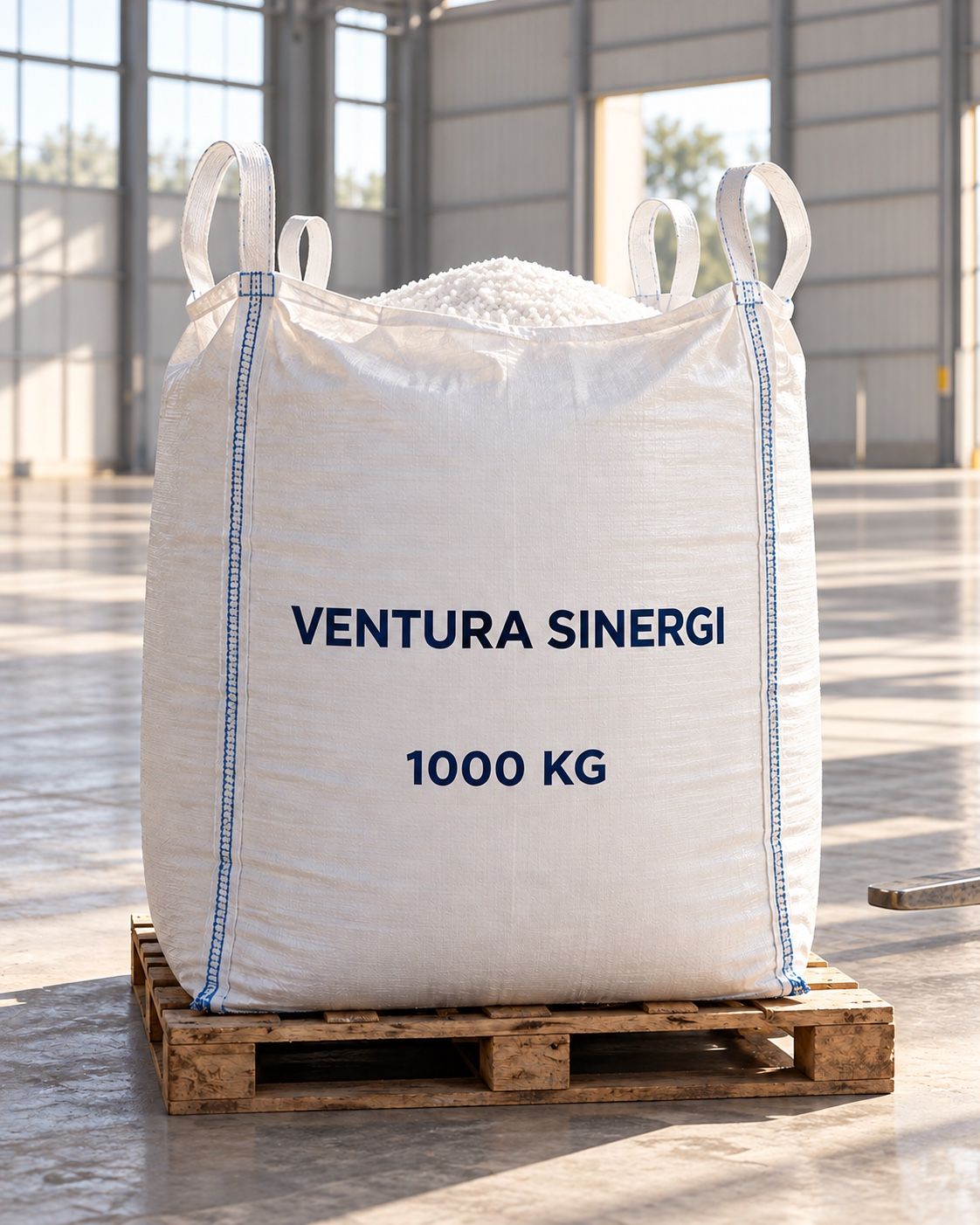
Bulk packaging for feed mills
High-volume feed mills often choose 1-tonne jumbo bags (FIBC) to fill ingredient bins faster and cut down on empty sacks. 25 kg and 50 kg woven PP sacks remain available for mills that tip salt by hand. Available formats, confirm per order.
Monthly salt need can be worked out from feed output and the salt percentage in your formula with the salt requirement calculator.
Buying considerations
- Non-iodized: state non-iodized salt on the order. If your formula does supply iodine through salt, iodized fine salt is also available.
- Iodization rules: mandates such as Malaysia's since 30 September 2020 (Malaysian Ministry of Health) target salt for human consumption. If your feed salt is imported into such a market, confirm its classification with your importer.
- Moisture: damp salt cakes in bins and feeders. Ask for the moisture value on the COA [COA] and store sacks dry.
- Packaging: 25 kg and 50 kg sacks, or 1-tonne jumbo bags. Available formats, confirm per order.
- Documents: COA per batch; Halal certificate available if the buyer needs it (certificate number [awaiting data]).
Related pages
- Non-iodized salt Coarse K1, K2, K3 and fine salt mesh 16, 18, 20.
- Salt requirement calculator From feed output to number of sacks.
- All applications Typical selection for six industries.