Why salt matters in chemical, textile and leather processing
In the chemical industry, sodium chloride serves as a raw material or a processing aid, for example to make brine, as a filler, or to precipitate a product from solution (salting out). In sensitive processes such as brine electrolysis in chlor-alkali plants, calcium, magnesium and sulphate have to be removed before the brine enters the cells, so the salt specification follows what the plant's brine purification can handle.
When cellulose fibres such as cotton are dyed with reactive or direct dyes, salt is added to the dye bath as an electrolyte. It suppresses the negative charge on the fibre surface so more dye is taken up. Because the salt is dissolved, insoluble matter and iron content can affect the shade on light-coloured fabric, so mills usually check the COA before accepting a batch.
In leather, salt is used to cure raw hides after slaughter: hides are salted or soaked in brine to draw out water and hold back spoilage bacteria during storage and shipment to the tannery. Salt is also used with acid in the pickling stage before tanning, to stop the hide from swelling.
Recommended products
Typical selection for chemical, textile and leather users. Confirm against your process specification.
| Product | Why it is chosen | Product page |
|---|---|---|
| Coarse salt K2 (non-iodized) | For raw hide curing, textile dye baths and process brine that does not need the highest purity. | Coarse Salt K2 |
| Coarse salt K3 (non-iodized) | For high-volume uses that are not sensitive to colour or impurities, such as salting raw hides, where your specification allows. | Coarse Salt K3 |
| Coarse salt K1 (non-iodized) | Where the process calls for higher NaCl or lower insoluble matter, for example dyeing light-coloured fabric. | Coarse Salt K1 |
Grade descriptions follow the general literature (KKP). Ventura's NaCl, moisture and insoluble-matter values are published per batch on the COA.
Regular supply for plants
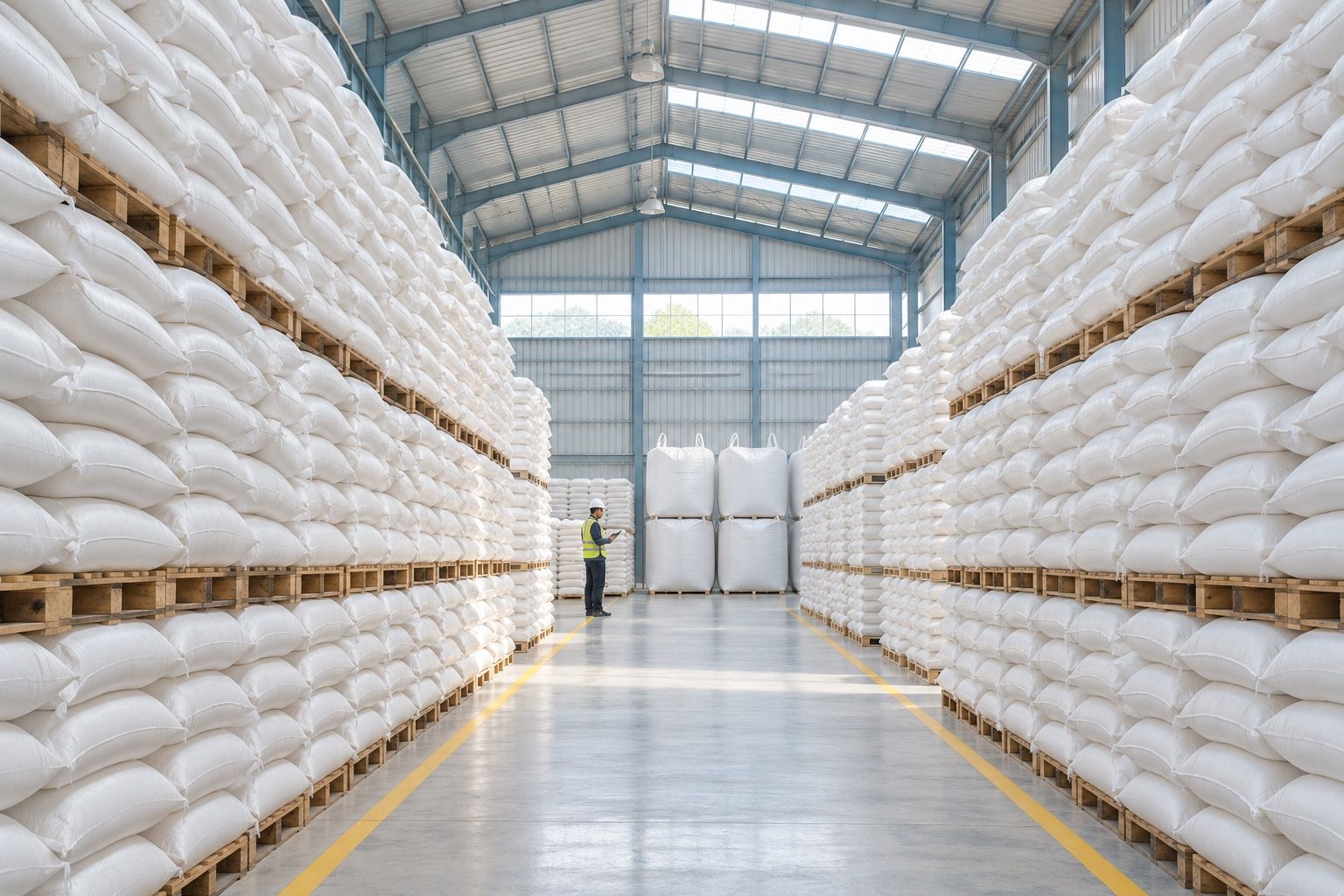
Industrial users usually buy salt on a regular schedule in 1-tonne jumbo bags or 50 kg sacks; 25 kg sacks are also available. Available formats, confirm per order. Ventura's monthly supply capacity: [awaiting data].
Beyond salt, Ventura supplies industrial chemicals: caustic soda (NaOH) for textile processing and chemical manufacturing, hydrochloric acid (HCl) for pH adjustment and steel pickling, and PAC as a coagulant for wastewater treatment. Specification, TDS and MSDS on request.
Buying considerations
- Process specification: prepare your limits for minimum NaCl, insoluble matter, calcium, magnesium, iron and grain size, and match them against the batch COA [COA].
- Iodine: coarse K1, K2 and K3 are non-iodized. Iodization mandates such as Malaysia's since 30 September 2020 (Malaysian Ministry of Health) target consumption salt; when exporting industrial salt, make sure your importer classifies the shipment according to its use.
- HS classification: salt falls under HS heading 2501 (source). Sub-headings are discussed on the HS code 2501 page.
- Packaging: 25 kg and 50 kg woven PP sacks, or 1-tonne jumbo bags. Available formats, confirm per order.
- Documents: COA per batch; Halal certificate available if the buyer needs it (certificate number [awaiting data]).
Related pages
- Salt grades K1, K2, K3 How the coarse grades differ.
- Chemicals NaOH, HCl and PAC.
- HS code 2501 Classifying salt for export.
- All applications Typical selection for six industries.